
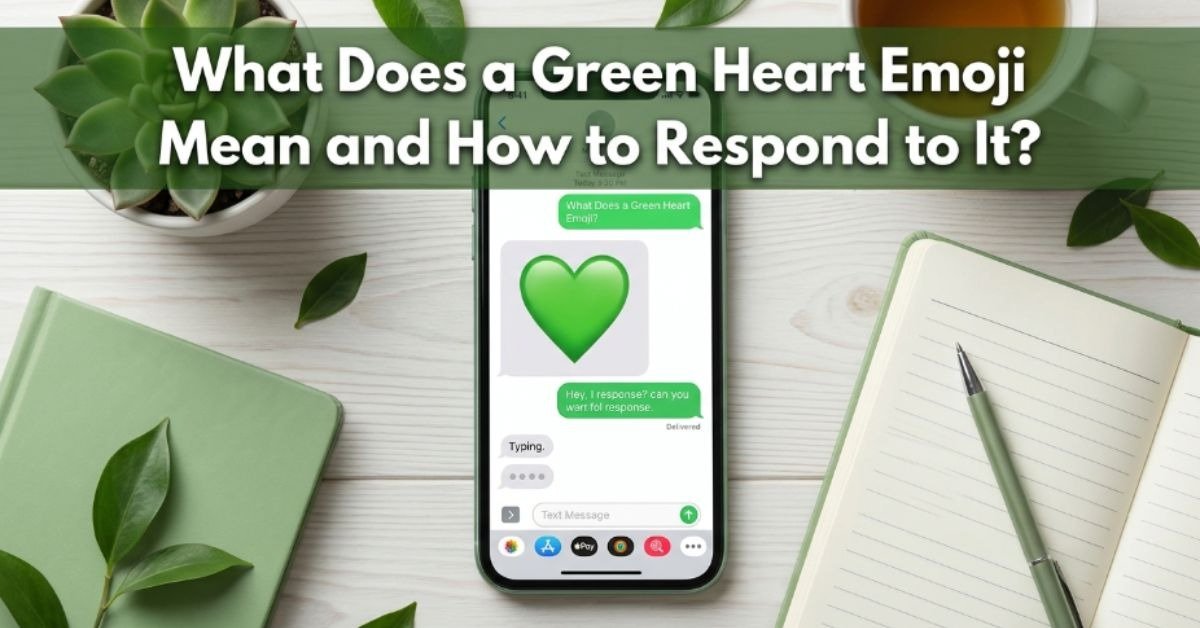
The green heart emoji 💚 is one of the most misunderstood emojis in digital communication. People use it in different ways — sometimes for friendship, sometimes for nature, and sometimes for romance. Knowing what it means can help you respond appropriately.
Green Heart for Friendship and Care
The green heart is widely used to show care, support, and deep friendship. It carries a warm and steady energy that feels less intense than a red heart. When someone sends you a green heart, they are often saying they value you calmly and genuinely.
This emoji is popular among close friends who want to express loyalty without making things romantic. It feels grounded and real, like a friendship that has stood the test of time. Many people use it as their go-to heart for someone they truly trust.
The green heart also works well in supportive conversations. If a friend is going through something hard, sending 💚 says “I am here for you” quietly and steadily. It feels less dramatic than other hearts but just as meaningful.
- Used to show loyalty and long-term friendship
- Signals emotional support without romantic overtones
- Often sent between best friends, siblings, or close family
- Feels calm, steady, and deeply caring
- Works well in both casual and emotional conversations
Green Heart and Nature Connection
The green heart has a strong connection to nature, plants, and the environment. Its color alone brings to mind forests, gardens, and all things growing. People who love the outdoors often use it to talk about nature-related topics.
Environmentalists and eco-conscious communities use the green heart to show their love for the planet. You will often see it in posts about sustainability, hiking, gardening, and green living. It has become a symbol for anyone who cares about the earth.
Plant lovers also use 💚 when sharing photos of their garden or houseplants. It fits naturally into any conversation about flowers, trees, or outdoor adventures. If someone sends you a green heart on a nature post, they are celebrating that connection with you.
| Context | What the Green Heart Means |
| Nature posts | Love for the environment |
| Gardening content | Passion for plants and growing things |
| Eco topics | Support for sustainability |
| Hiking and outdoor photos | Shared love of the outdoors |
| Food and health posts | Clean eating or organic lifestyle |
Green Heart in Romantic Conversations
The green heart is slowly finding its place in romantic conversations, too. It is not as bold as the red heart, so it often shows up in the early stages of a relationship. Sending 💚 can mean “I like you” without going all in right away.
Some people use the green heart to test the waters before using red or pink hearts. It gives a soft romantic hint while keeping things light and relaxed. If someone starts using it after mostly sending neutral emojis, that is often a sign of growing feelings.
In longer relationships, the green heart can show a deep and comfortable kind of love. It moves past the fiery feeling of red and settles into something more peaceful and lasting. It says, “I love you calmly and steadily.”
- Early romance: a soft way to hint at feelings
- Casual dating: shows interest without pressure
- Long-term love: represents comfortable and stable affection
- Used when someone wants to say more than just “friend” but is not ready for 💗 or ❤️
- Often appears alongside other hearts when feelings are growing
When the Green Heart Signals Jealousy
Not every green heart is a kind one. In some contexts, the green heart is linked to jealousy and envy. The phrase “green with envy” has existed for centuries, and the emoji can carry that same energy online.
If someone sends you a 💚 after you post something exciting or brag-worthy, it might not be pure congratulations. It could be a passive way of saying they wish they had what you have. Context and relationship history matter a lot here.
This use of the green heart is more common in competitive or dramatic social situations. If you notice it showing up in places where praise feels off, take a second look at the tone of the message. It is not always easy to tell, but your gut feeling usually helps.
- “Green with envy” is a cultural phrase that maps onto this emoji
- Watch for it in congratulatory messages that feel slightly cold
- More common between people with competitive relationships
- Can appear in comments on success posts or life updates
- Usually paired with minimal text or a dry tone
Green Heart on Social Media and Online Communities
The green heart has a strong presence on social media platforms. On TikTok, Instagram, and Twitter/X, it is used across fan communities, wellness pages, and nature accounts. Different online groups have given it their own meaning over time.
On TikTok, the green heart is popular in mental health and self-care content. Creators use it to signal a safe and supportive space. Viewers often reply with 💚 to show solidarity and care within those communities.
In sports and gaming communities, the green heart sometimes represents a team color or an in-game symbol. It is used to cheer on a favorite team or celebrate a win. Online communities have truly made this emoji their own.
| Platform | Common Use of 💚 |
| TikTok | Mental health, self-care, supportive spaces |
| Nature, fitness, organic lifestyle content | |
| Twitter/X | Fan communities, awareness campaigns |
| Discord | Gaming servers, team color, group identity |
| Environmental topics, wholesome communities |
Cultural and Generational Differences
The meaning of the green heart is not the same everywhere. Different cultures and age groups attach different feelings to it. What feels casual to one person may feel deeply meaningful to another.
Older generations tend to see all heart emojis as signs of love or affection. For them, sending any heart — including green — carries emotional weight. They are less likely to use it casually or ironically.
Younger generations, especially Gen Z, treat emojis more playfully and with layers of meaning. A green heart might be ironic, aesthetic, or part of an inside joke. Understanding who sent it is just as important as knowing what the emoji typically means.
- Older users: hearts carry more emotional significance
- Gen Z: uses emojis with irony, humor, and layered meaning
- Some cultures associate green with luck or prosperity
- In some regions, green relates to religious meaning (e.g., Islam)
- Western cultures often tie green to nature and environmental causes
What the Green Heart Means from a Crush
Getting a green heart from your crush can feel exciting and confusing at the same time. It is not as obvious as a red heart, but it is also not as neutral as a thumbs up. It lives in an interesting middle space.
If your crush sends you 💚 out of nowhere, it often means they are thinking about you warmly. They may not be ready to show their full romantic feelings yet, but the green heart is a gentle way to reach out. Pay attention to when and how often they use it.
If the green heart comes along with longer messages, late-night replies, or personal topics, it is a stronger sign of interest. A single green heart on a public post might just be friendly. But a direct message with 💚 usually means something more.
- Sent in a DM: likely a hint of romantic interest
- On a public post: could be friendly or slightly flirty
- Used repeatedly over time: feelings are probably growing
- Mixed with other hearts: a strong sign of deeper interest
- Sent late at night: often more personal and intentional
Green Heart vs Other Heart Emojis
The green heart stands out clearly when compared to other heart emojis. Each color carries its own emotional weight, and knowing the difference helps you understand what someone is really saying.
The red heart ❤️ is the most romantic and serious. The pink heart 🩷 is sweet and affectionate. The yellow heart 💛 is bright and cheerful, often for best friends. The blue heart 💙 is calm and loyal. The black heart 🖤 is edgy or sarcastic.
The green heart 💚 sits in a unique spot. It is warmer than blue, less intense than red, and more grounded than yellow. It works across friendship, nature, light romance, and online community use.
| Emoji | Primary Meaning |
| ❤️ Red Heart | Deep romantic love |
| 🩷 Pink Heart | Sweet affection and care |
| 💛 Yellow Heart | Friendship and happiness |
| 💙 Blue Heart | Calm loyalty and trust |
| 💚 Green Heart | Nature, care, light romance, or envy |
| 🖤 Black Heart | Humor, dark aesthetic, sarcasm |
| 🤍 White Heart | Purity, peace, or sadness |
| 🧡 Orange Heart | Warmth and friendly care |
How to Respond to a Green Heart 💚
Responding to a green heart is easier once you understand the context. Think about who sent it, what you were talking about, and the overall tone of your conversation. That will tell you a lot.
If it came from a friend in a supportive moment, a simple 💚 back is warm and enough. You can also reply with a kind message to keep the good energy going. Matching their energy usually works best.
If it came from someone you are interested in romantically, you have more room to play. You can send a 💚 back to keep things light, or step it up with a 💗 to hint at your feelings. Let the conversation guide you.
- From a friend: reply with 💚, a warm note, or a smile emoji
- From a crush: match with 💚 or upgrade to 💗 if you feel bold
- On a nature post: reply with 🌿 or another nature emoji
- In a support moment: say something kind along with 💚
- In a group chat: a simple 💚 back keeps the vibe going
Best Responses to a Green Heart in Different Situations
Knowing exactly what to say after receiving a green heart can make your reply feel natural and confident. The right response depends on the relationship and the setting. Here are some ready-to-use ideas.
For a close friend: “💚 always” or “You know I got you 💚” works perfectly. It keeps the warmth alive and feels genuine. Short and sweet is the way to go.
For a crush or romantic interest: Try “Sending one right back 💚” or “This made me smile 😊💚.” You can also follow up with a question to keep the conversation going. The goal is to stay light and inviting.
With a friend:
- “💚 forever, you know that”
- “Always here for you 💚”
- “This made my day 💚”
With a crush:
- “Right back at you 💚”
- “You always know how to make me smile 💚”
- “Does this mean what I think it means? 😏💚”
On a nature or wellness post:
- “Nature heals 🌿💚”
- “This is everything 💚”
- “Pure and peaceful vibes 💚”
In a supportive moment:
- “I feel this so much 💚”
- “Thank you, this means a lot 💚”
- “You are not alone 💚”
Expert Insights on Emoji Communication
Emoji researchers and communication experts agree that emojis add emotional tone to digital messages. Without them, text can feel flat or unclear. The right emoji at the right moment changes everything about how a message lands.
Dr. Gretchen McCulloch, a linguist who studies internet language, has written about how emojis function like tone of voice in text. They help the reader understand the feeling behind the words. A heart emoji in particular adds warmth that plain words cannot always carry.
Studies show that people who use emojis in messages are often perceived as friendlier and more approachable. The green heart, being softer than red, helps create a relaxed and open tone. It invites connection without putting pressure on the other person.
Common Mistakes When Using the Green Heart
Many people send the green heart without thinking about how it might be read. This can lead to confusion, especially when the relationship is new. A little thought before sending goes a long way.
One common mistake is using 💚 when you mean something purely romantic. The other person may not pick up on that signal because green hearts read as friendly or calm by default. If your feelings are strong, a red or pink heart communicates that more clearly.
Another mistake is sending it sarcastically without context. If someone does not know you well, a green heart on a success post can look like jealousy even if you meant to be supportive. Add a warm message to remove any doubt.
- Do not use 💚 as a romantic signal if you want to be direct
- Avoid it in sarcastic contexts unless the relationship is close
- Do not overuse it — it loses meaning when sent too often
- Be aware of the jealousy connection when sending it on achievement posts
- Consider your relationship with the person before sending
Quick Takeaways: How to Use & Respond
| Situation | What It Means | How to Respond |
| From a close friend | Care and loyalty | 💚 or a warm reply |
| From a crush | Soft romantic interest | 💚 or 💗 |
| On a nature post | Love of the outdoors | 🌿💚 |
| In a support message | Emotional care | Thank them and share 💚 |
| On an achievement post | Possibly envy | Reply kindly, note the tone |
| In a wellness community | Solidarity and safety | 💚 back or encouraging words |
Conclusion
The green heart emoji 💚 means different things to different people, but it almost always carries warmth. Whether it comes from a friend, a crush, or a stranger online, it is worth paying attention to the context around it.
Now that you know the full range of its meanings, you can both send and respond to 💚 with confidence. Let the conversation guide you, and do not be afraid to send one back when it feels right.
Frequently Asked Questions
What does a green heart emoji mean in a text message?
A green heart emoji usually means love for nature, health, or growth. It can also show support, care, or a calm and positive vibe in a conversation.
How do you respond to a green heart emoji from someone you like?
Send back a green heart or a warm smile emoji to match their energy. You can also reply with a sweet message like “Love this! 💚” to keep the good vibes going.
What does it mean when a girl sends you a green heart emoji?
When a girl sends a green heart, she may be showing friendly affection, support, or a deep emotional connection tied to nature or wellness. Context matters — it could be platonic or romantic.
What does a green heart emoji mean on Instagram or social media?
On Instagram, a green heart often appears in posts about nature, fitness, mental health, or eco-friendly living. It signals positivity, balance, and a love for the natural world.
Is the green heart emoji used for friendship or romance?
The green heart is mostly used for friendship, nature love, and support rather than romance. However, it can carry romantic meaning depending on the context and the relationship.
What does a green heart emoji mean from a guy?
When a guy sends a green heart, he may be expressing care, calmness, or a love for nature and healthy living. It can also mean he supports you in a warm, low-key way.
How is the green heart emoji different from a red heart emoji?
A red heart expresses deep romantic love and passion, while a green heart is more about nature, wellness, friendship, and growth. The green heart feels lighter and more relaxed in tone.
When should you use a green heart emoji in a conversation?
Use a green heart when talking about nature, plants, healthy food, mental wellness, or showing gentle support to a friend. It works great in eco-friendly, fitness, or feel-good chats.
What does it mean when someone replies with only a green heart emoji?
A single green heart reply usually means they appreciate what you said and feel a calm, positive connection with you. It is a simple but meaningful way to show they care.
Can a green heart emoji have a negative or bad meaning?
In most cases, the green heart emoji has no negative meaning. Rarely, it may be linked to jealousy since green is associated with envy, but this interpretation is uncommon in everyday texting.

I’m Amelia Taylor, an AI content writer with 3 years of experience producing original, high-quality articles across niches.